
#174: Superman Timeline

Hello, people of the future! I’m writing this to you a week ago, since I’m currently in the midst of the San Diego Comic Convention, and even I can’t put one of these Newsletter segments together in the midst of such madness. But not wanting to leave you completely high and dry this week, I scouted around for something that I could whip together relatively easily. And I think I’ve found it.
With the success of the new James Gunn film, people seem to be in a real Superman frame of mind. For the past couple of years, I’ve been steadily compiling an exhaustive timeline concerning the Man of Steel’s development. What I’ve completed so far isn’t completely comprehensive, but there’s enough detail, I think, to make it reading of interest to those who are fascinated by teh subject, as I am. For those who aren’t, you pretty much get to take this week off.
I’m only going to give you the earliest years here, covering 1932-1939, the Thirties, since I don’t want to absolutely drown you in listings. But there’s a lot of good action in these years, including Jerry Siegel’s attempts to sell his idea with other artists and a lot of back-and-forth legal actions that resulted in Superman being owned by what was then Detective Comics Inc. So here we go:
Superman Timeline
1932
June 2- Jerry Siegel’s father dies of a heart attack during a robbery at his store
October – Jerry Siegel begins SCIENCE FICTION fanzine while in High School.
December – SCIENCE FICTION #3. Jerry Siegel writes “The Reign of the Superman” prose story
1933
January – SCIENCE FICTION #3 is published.
April – Siegel reads the article “The Funny Pages” in FORTUNE Magazine and decides to turn his efforts towards writing comic strips.
June 1 - Siegel and Shuster create their first THE SUPERMAN strip in emulation of Humor Publishing Co’s DETECTIVE DAN comic book. This Superman is given his super-powers though an injection from a scientist.
June 8 – Consolidated Book Publishers responds that they will review THE SUPERMAN for publication, but that sales on DETECTIVE DAN are soft.
July 17 --Jerry Siegel approaches artist Leo E. O’Mealia to collaborate on new Superman samples. This Superman has come to the present from the far future.
August 8 – Jerry Siegel sends a follow-up letter to Consolidated
August 23 – Consolidated Book Publishers rejects first version of Superman. They indicate that they sold 40,000 copies of DETECTIVE DAN on a print run of 100,000.
September 11 – Leo E. O’Mealia writes to Jerry Siegel that he has begun working on the Superman sample script Siegel has sent him. Joe Shuster destroys the original art pages to THE SUPERMAN in anger when he hears this news.
November 2 – Leo O’Mealia writes to Jerry Siegel informing him that the Bell Syndicate has back-burnered plans to syndicate Superman, though there was still interest in it.
1934
June – Jerry Siegel graduates High School
June 12 – Siegel approaches newspaper strip artist Russell Keaton to produce new Superman newspaper strip samples. This Superman is a child from the far future sent back to the present. The strip finds no buyers.
June 14 – Russell Keaton writes to Jerry Siegel and agrees to draw Superman
June 22 -Russell Keaton writes to Jerry Siegel that he has begun work on Superman sample strips
June 26 – Editor of Super Magazines Inc. expressed interest in Superman, but no deal is made
July 6 – Russell Keaton writes to Jerry Siegel that he is almost ready to send him the first week’s worth of sample strips for Superman
July 11 – Russell Keaton writes to Jerry Siegel that he can expect the Superman samples by the middle of the following week. This woud be two weeks’ worth of samples.
August 7 – Russell Keaton writes to Jerry Siegel to praise the new Superman script Siegel has sent him
August 31 – Leo E. O’Malia writes to Jerry Siegel that he’s heard that Siegel has enlisted the artist Russell Keaton to do Superman. No O’Mealia Superman samples were ever shared with Siegel.
Autumn - Major Malcolm Wheeler-Nicholson forms National Allied Publications and begins to publish comic books.
September 11 – Russell Keaton writes to Jerry Siegel indicating that the second week’s worth of Superman samples are all penciled.
October 17 – Russell Keaton writes to Jerry Siegel that half of the second week’s worth of sample strips are now completed
November 3 – Russell Keaton writes to Jerry Siegel that he is going to show the Superman sample strips to Publisher’s Syndicate for possible syndication
November – Russell Keaton writes Jerry Siegel that he is withdrawing from the Superman project
November - Siegel lies in bed and dreams up the idea for the final version of Superman. Takes it to Joe Shuster, who designs the characters and costume and draws four weeks’ worth of sample strips.
November 16 – Super Magazines Inc. declines Jerry Siegel’s overtures of a comic book project
1935
January 11 – NEW FUN #1 published by National Allied Publications
January 13 – Jolen Kovacs places an ad in the Cleveland Plain Dealer looking for modeling opportunities. She is hired by Joe Shuster to model for Lois Lane
February 21 – Bell Syndicate considers Superman for publication
May 11 – Jerry Siegel sends a follow-up letter to Bell Syndicate
May 27 – Bell Syndicate rejects Superman. “In the market now for only for strips likely to have the most extraordinary appeal. We do not feel Superman gets into that category.”
June 6 – Major Malcolm Wheeler-Nicholson writes to Jerry Siegel. Agrees to purchase Henri Duval and Dr. Occult
July 3 – Major Malcolm Wheeler-Nicholson acknowledges receipt of the Superman sample material
September 13 – NEW FUN #6 – Siegel and Shuster sell their first two strips, HENRI DUVAL and DR. OCCULT
October 4 – Major Malcolm Wheeler-Nicholson writes to Jerry Siegel indicating that the Superman samples are being held for consideration for newspaper syndication. The Major suggests running the character in one of his magazines first to build interest. Siegel and Shuster decide to decline. They have not yet been paid for Henri Duval and Dr. Occult
October 23 – Major Malcolm Wheeler-Nicholson writes Jerry Siegel acknowledging that he is returning the Superman sample material
December 27 – NEW COMICS #2 – Siegel and Shuster’s FEDERAL MEN begins. Idea for the strip comes from Major Malcolm Wheeler-Nicholson
1936
Early - M.C Gaines is interested in running SUPERMAN in POPULAR COMICS for Dell, but the deal falls through. His editor Shelly Mayer is crazy about the proposed strip
February 27 – Swan-McDonald Features Inc rejects Superman, but they propose doing it as a syndicated text feature. Siegel turns this offer down.
March 13 – Major Malcolm Wheeler-Nicholson writes to Jerry Siegel indicating that he shouldn’t be worried about the legal wording on the back of the checks he’s received and confirming that al rights to Dr. Occult remain with him and Joe Shuster apart from first publication rights. He suggests that Siegel & Shuster do Slam Bradley for his in-development DETECTIVE COMICS launch
March 20 – THE COMICS #1 – A chapter of Siegel & Shuster’s Dr. Occult series is run here under the altered title Dr. Mystic. Published by Centaur Publications. Story continues in MORE FUN COMICS #14. A Federal Men installment is published here as Federal Agent
March 20 – Major Malcolm Wheeler-Nicholson writes to Jerry Siegel indicating that Henri Duval is being dropped. He suggests that Siegel & Shuster instead produce Calling All Cars/Radio Squad
May 24 – MORE FUN COMICS #11 – Siegel and Shuster’s CALLING ALL CARS /RADIO SQUAD begins
May – Whit Ellsworth writes Jerry Siegel instructing him and Joe to begin work on Slam Bradley for DETECTIVE CMICS
June 2 – M.C. Gaines sends Jerry Siegel a letter informing him that Gaines “hasn’t been able to do anything yet with Superman, nor with any of the other material” submitted by Siegel and Shuster.
July – Siegel & Shuster submit Superman to Will Eisner at WOW, WHAT A MAGAZINE. He rejects it.
August 20 – Whit Ellsworth writes Jerry Siegel asking him to give Major Malcolm Wheeler-Nicholson a bit more time to come up with the funds owed to the team for their past work.
August 28 - MORE FUN COMICS #14 – Dr. Occult dons a cape and costume in a three-part story that presages Superman
September 9 – Esquire Features rejects Superman. “Pay a little more attention to actual drawing. Yours seems crude and hurried.”
December 14 – Whit Ellsworth writes Jerry Siegel that they are looking for a printer for DETECTIVE COMICS
December 16 -Whit Ellsworth writes Jerry Siegel that Major Malcolm Wheeler-Nicholson is signing a deal with the printer to print DETECTIVE COMICS
December 18 – NEW ADVENTURE COMICS #12 – Siegel & Shuster feature a future lawman named Jor-L in their Federal Men strip.
1937
February 11 – Jerry Siegel submits Superman to the Ledger Syndicate
February 18-- TIP-TOP COMICS from United Features rejects Superman samples after expressing some interest. “A rather immature piece of work.”
February 25 – DETECTIVE COMICS #1 – Siegel and Shuster’s BART REGAN, SPY and SLAM BRADLEY begin
March 2 – The Ledger Syndicate rejects Superman
March 16 – Major Malcolm Wheeler-Nicholson writes to Jerry Siegel telling him that sales of DETECTIVE COMICS look encouraging and mentioning that he is planning a fourth title.
August 3 – Major Malcolm Wheeler-Nicholson writes to Jerry Siegel, citing cash-flow difficulties as why he hasn’t been able to pay Siegel & Shuster all of the back-pay they are owed
October 29 – Trojan Publishing writes to Jerry Siegel indicating that they are not interested in publishing a comic magazine, as he has suggested.
November 30 – M.C. Gaines sends a letter to Siegel & Shuster stating that the McClure Newspaper Syndicate has an interest in distributing Superman as a newspaper strip.
December 1 – Jerry Siegel replies to M. C. Gaines asking for details in terms of rates and specifications for the work. He attempts to get Gaines to let him proceed on new strips without any further editorial oversight.
December 1 – Major Malcolm Wheeler-Nicholson writes to Jerry Siegel indicating that he can pay the $600 owed to Siegel & Shuster if the pair will sign a guarantee required by his partner Harry Donenfeld that they will continue to produce material even though they are owed back pay.
December 1 – Jack Liebowitz writes Jerry Siegel introducing himself and Harry Donenfeld and setting up a meeting with him in New York City.
December 4 – Siegel & Shuster sign a two-year employment contract with Detective Comics Inc. for right of first refusal to the team’s work. It expires on December 3, 1939. At this meeting, Liebowitz mentions plans for ACTION COMICS and suggests that Siegel & Shuster submit to it.
December 6 – Jerry Siegel writes to Jack Liebowitz with suggested features for ACTION COMICS, including Superman
December 9 – Jack Liebowitz writes Jerry Siegel that they are considering his various submissions
December 16 – Jerry Siegel writes M.C. Gaines concerning assorted strips that he’s submitted for consideration. He indicates that Gaines and Liebowitz are sharing this material back and forth between them.
December 30 – Donny Press sues National Allied Publications for lack of payment in bankruptcy court.
According to documents filed in the 1948 lawsuit over Superman, in 1937 Siegel and Shuster earned $612.00 for work done in the comics for Detective Comics Inc.
1938
January 2 – Harry Donenfeld and Jack Liebowitz buy Major Malcom Wheeler-Nicholson out of Detective Comics Inc.
January 5 – Jack Liebowitz writes to Jerry Siegel that Major Malcolm Wheeler-Nicholson’s company has gone into bankruptcy and been taken over by Harry Donenfeld and himself.
January ?? – M. C Gaines and Jack Liebowitz phone Jerry Siegel and indicate that the McClure Syndicate won’t be using any of Siegel’s submitted material. Therefore, it has all been turned over to Liebowitz for potential inclusion in ACTON COMICS
January 10 – Vin Sullivan writes to Jerry Siegel that Detective Comics Inc. wants to publish Superman in upcoming ACTION COMICS launch.
January 12 – Vin Sullivan writes to Jerry Siegel telling him that it would be unacceptable for Superman pages to contain only 5 and 6 panels each.
January 28 - ACTION COMICS #1 Ashcan produced. Uses material from DETECTIVE COMICS #1 and an unused cover intended for DETECTIVE COMICS #2.
January 28 – ACTION FUNNIES #1 Ashcan produced. Uses material from DETECTIVE COMICS #10. Cover illustration will be used on ACTION COMICS #3.
January 31 – Vin Sullivan writes to Jerry Siegel that he is holding the Superman samples in preparation for a big meeting to determine the contents of ACTION COMICS
February 1 – Editor Vin Sullivan returns Superman sample strips to Siegel & Shuster so that they can be pasted up into 13 pages for ACTION COMICS #1. They have three weeks to do this.
February 4 – Vin Sullivan writes to Jerry Siegel confirming that he will need Superman pasted up into 13 pages for ACTION COMICS launch and that they’ll need 8 panels per page.
February 9 – M. C. Gaines writes to Jerry Siegel indicating that all of Siegel and Shuster’s samples have now been handed over to Vin Sullivan
February 16 – Vin Sullivan writes to Jerry Siegel that he is looking forward to receiving the 13 page Superman story
February 22 – Vin Sullivan sends Siegel & Shuster a silver print showing that Detective Comics Inc is using one of their Superman presentation pieces as the cover to ACTION COMICS #1. They are paid $6.00 for this use. He indicates that Dr. Occult is being dropped from MORE FUN COMICS
March 1 – Jerry Siegel and Joe Shuster sign away all rights to Superman for a payment of $130.00
March 3 – Siegel and Shuster’s signed contract is returned to Detective Comics Inc. by mail.
March 14 – Vin Sullivan writes Jerry Siegel offering him only $1.00 a page to write other features for them. Siegel turns down this request.
April 8 – Siegel receives a letter from the McClure Syndicate asking for two weeks’ worth of Superman samples to consider for syndication. Indicates that Siegel will need to get permission from Donenfeld and Liebowitz for this.
April 8 – Jack Liebowitz writes Jerry Siegel with a check that includes a $6.00 payment for the illustration used on the cover to ACTION COMICS #1. He also complains that the quality of the artwork is declining.
April 13 – McClure Syndicate writes to Jerry Siegel requesting the two sample weeks of Superman be delivered to them by July 1
April 18 – Jerry Siegel writes Jack Liebowitz letting him know about the samples the McClure Syndicate has requested that he and Joe are working on and urging Liebowitz to drop in on McClure and grease the wheels.
April 19 – MORE FUN COMICS #31. House ad for ACTION COMICS #1 runs. First in-print appearance of Superman
April 21 – McClure Syndicate writes to Jerry Siegel returning his submitted script for the Superman sample weeks and indicating that they will review all materials on July 1
April 26 – DETECTIVE COMICS #15. House ad for ACTION COMICS #1 runs.
April 28 – NEW ADVENTURE COMICS #28. House ad for ACTION COMICS #1 runs
May 5 (April 18) – ACTION COMICS #1. Superman debuts. Print run: 200,000. Editor: Vin Sullivan. Clark Kent works for the Daily Star for an unnamed editor.
June 2 – ACTION COMICS #2. Clark Kent works for the Evening News
June 9 – Jack Liebowitz writes Jerry Siegel, indicating that he cannot return the rights to Superman other than first publication rights to him, but that if McClure makes a syndication offer, they can all come to some equitable agreement.
June 13 – M. C. Gaines writes to Jerry Siegel asking him to send the completed Superman samples to him at the McClure Syndicate
July 5 – ACTION COMICS #3
July 28 – FUNNY PAGES v2 #10. The Arrow debuts
August 2 – ACTION COMICS #4 – Sales begin to surge upwards. Kids are asking newsdealers for “The magazine with Superman in it.” Clark Kent works for the Evening News.
August 10 – Chas E. Lounesbury of the McClure Syndicate writes Jerry Siegel to indicate a positive initial response to the Superman sample strips.
September 6 – ACTION COMICS #5. Clark Kent works for the Daily Star. Superman and Lois’s first kiss.
September 7 – Chas E. Lounesbry of the McClure Syndicate writes Jerry Siegel apologizing for the delays in coming to a decision on syndicating Superman
September 22 – Jerry Siegel and Joe Shuster sign a ten year contract (five years with a five year renewal at Detective Comics’ option) with Detective Comics Inc. to create work for the company and give them right of first refusal to any new ideas. Lays out the terms of payment for the McClure Syndicate deal for the Superman newspaper strip as well.
September 26 – Jerry Siegel writes Jack Liebowitz that he and Joe would like reprint payments when Superman is sold overseas and they want a raise to $15 per page on Superman immediately.
September 28 – Jack Liebowitz sends Jerry Siegel a letter in which he excoriates the writer as being too greedy and indicates that he and Shuster can be fired at any time. He sends Siegel and Shuster the McClure syndication contracts for the newspaper strip to sign.
September 30 – Jerry Siegel writes Jack Liebowitz in which he returns the signed syndication contracts and is apologetic for earlier demanding more money.
October 4 – ACTION COMICS #6 – Story about a fake agent who licenses Superman for exploitation without possessing any rights. Inks by Paul Cassidy or Paul Lauretta.
October 31 – Detective Comics Inc. sends a letter to the McClure Syndicate confirming earlier conversations that Detective Comics Inc. will not offer Superman material to other countries without consulting with the McClure Syndicate first, to ensure that the two parties are not stepping on one another’s efforts.
November 3- ACTION COMICS #7. Second Superman cover. Print run: 500,000. Wayne Boring ghosts most of the penciling for Joe Shuster.
November 30 – Jerry Siegel suggests a spin-off strip featuring Superman as a youth, Superboy.
December 6 – ACTION COMICS #8. First use of super-hearing. Inks by Paul Lauretta
December – Jerry Siegel writes a thirteen page Superboy script and submits it for consideration.
Siegel and Shuster begin to hire other artists to help produce Superman material as assistants and ghosts. Staff included Paul Cassidy, Wayne Boring, Ira Yarborough, John Sikela, Leo Nowak, Dennis Neville, Ed Dobrotka, Paul J. Lauretta
According to documents filed in the 1948 lawsuit over Superman, in 1938 Siegel and Shuster earned $4530.00 for work done in the comics for Detective Comics Inc.
1939
January 3 – ACTION COMICS #9 – Superman cover blurb. Wayne Boring assists on pencils and inks.
January 16 – SUPERMAN daily newspaper strip begins its run distributed by the McClure Syndicate. First storyline: Superman Comes To Earth. First mention of Superman’s home planet being called Krypton and that his birth parents were Jor-L and Lora.
January 17- Second SUPERMAN daily strip establishes the character’s given name as being Kal-L
January 30 – War Against Crime begins in the daily SUPERMAN Newspaper strip
January – Distributor flier ad: ACTION COMICS is the magazine with SUPERMAN
February 7 – ACTION COMICS #10 – 3rd Superman cover. Wayne Boring assists on pencils and inks.
February 20 – The Comeback of Larry Trent begins in the daily SUPERMAN Newspaper strip
February 21 – Jack Liebowitz sends a letter to the McClure Syndicate indicating that Jerry Siegel’s scripts and pencil layouts should go through the editorial process at Detective Comics Inc. before being cleared to be illustrated. Max Gaines is meant to be the person reviewing the material.
March – SUPERMAN COMICS Ashcan produced. Cover is taken from ACTION COMICS #7. Interior material from ACTION COMICS #8.
March 2 – Superman newspaper strip reprints begin running in the Belgium magazine SPIROU
March 3 – Richard H. Waldo of the McClure syndicate writes to Jack Liebowitz passing along a suggestion put forward by a subscribing editor that Superman needs an Achilles heel of some sort, or his stories are going to become repetitive and boring.
March 7 – ACTION COMICS #11 – Superman cover blurb. First use of X-Ray Vision. First reference to Superman as Man of Steel. Paul Cassidy ghosts the artwork for Joe Shuster.
March 7 – Superman newspaper strip reprints begin running in the French magazine ADVENTURES. Superman is renamed Yordi to avoid association with the German ubermensch
March 10 – Jack Liebowitz writes Jerry Siegel concerning a lawsuit being brought against SUPERMAN by Phillip Wylie, the author of Gladiator. The attorney pursuing the case also claims to represent George Bernard Shaw, the author of the play “Man and Superman”. Liebowitz also indicates that a first statement for the Superman newspaper strip will be forthcoming, and he lists some of the newspapers who are now carrying the strip, including those overseas in Poland, Yugoslavia, Belgium, and France.
March 15 – Detective Comics Inc. files suit against Bruns (Fox) Publications over Wonder Man in WONDER COMICS
March 17 – WONDER COMICS #1 – Wonder Man premieres. Instantly sued by DC
March 20 – Jewel Smugglers begins in the daily SUPERMAN Newspaper strip. George Taylor is named for the first time in this sequence.
March 27 – M.C. Gaines writes to Jerry Siegel about the SUPERMAN #1 reprint book, requests six new opening pages, a prose story and photographs of Jerry and Joe. They have a week to produce this material. Also mentions the impending launch of the Supermen of America fan club
March 31 – M. C Gaines writes to Jerry Siegel, sending him a cover proof of SUPERMAN #1
April 3 – Skyscraper of Death begins in the daily SUPERMAN Newspaper strip
April 3 – SUPERMAN #1 is completed and sent to the printer
April 3 – Jack Liebowitz sends Jerry Siegel a telegram informing him that the lawsuit over Wonder Man will begin next Thursday and requesting Siegel’s presence as a witness.
April 4 – ACTION COMICS #12. Superman vignette on cover
April 6 – Detective Comics Inc. vs Bruns (Fox) Publications begins. Jack Liebowitz testifies that the on sale date of ACTION COMICS#1 was April 18, 1938.
April 7- Court rules in summary judgment that Wonder Man is an infringement on Superman
April 12: Detective Comics Inc writes to Jerry Siegel that the reprinted material in SUPERMAN #1 may grant Siegel & Shuster a bonus payment depending on sales. Eventually, they are paid $200 for these reprinted stories.
April 18 – DETECTIVE COMICS #27 – Batman debuts (March 30?)
April 20 – Hannah Baker, a comics editor at the McClure Syndicate, sends Jerry Siegel a letter complaining about Joe Shuster’s artwork on the Superman newspaper strip. She calls the work “careless” and says that it “fails to provide distinguishing characteristics for the various persons” in the strip. She indicates that a McClure artist redrew several heads in a recent strip.
April 21 – Jack Liebowitz writes Jerry Siegel complaining about the quality of the work and that Siegel isn’t submitting plot synopses to Detective Comics Inc. for feedback
April 28 – WONDER COMICS #2 is published by Bruns (Fox) Publications. It does not contain a Wonder Man story.
April 30 – NEW YORK WORLD’S FAIR COMICS #1. New Superman story and cover vignette. The Sandman debuts. Superman’s hair miscolored blond on the cover. Editor: Vin Sullivan
May 1 – The Most Deadly Weapon begins in the daily SUPERMAN Newspaper strip
May 2 – ACTION COMICS #13 – Superman cover. First Ultra-Humanite, Superman’s first recurring enemy. First inconsistent appearance of the S-shield on Superman’s cape. Paul Cassidy ghosts for Joe Shuster.
May 9 – Jack Liebowitz writes to Jerry Siegel. Sends a payment of $500 and copies of SUPERMAN #1 and NEW YORK WORLD’S FAIR COMICS #1
May 11 – Jack Liebowitz writes Jerry Siegel about being unhappy about a nameless Shuster Studio artist who has been doing first Superman and then Slam Bradley. Liebowitz indicates that Shuster is who they hired and who they are paying, and they don’t care for the constantly changing style.
May 18 – SUPERMAN #1 – Reprints four earliest Superman stories from ACTION COMICS #1-4 with expanded origin and lead story lead-in. Intended as a one-shot. Print run: 500,000. Sells a second print run of 250,000 and a third of 150,000 for three printings total. Supermen of America fan club rolled out in this issue. First mention of Krypton in the comics. First appearance of Pa and Ma/Mary Kent. Editor: Vin Sullivan.
June 2 – ACTION COMICS #14 – Superman vignette. Ultra-Humanite. Paul Cassidy ghosts for Joe Shuster.
June 3 – Jerry Siegel and Bella Lifshitz apply for marriage license
June 10 – Jerry Siegel and Bella Lifshitz get their marriage certificate
June 12 – Superman and the Runaway begins in the daily SUPERMAN Newspaper strip
June 15 – MYSTERY MEN COMICS #1 – Blue Beetle premieres
June 18 – Jerry Siegel marries Bella Lifshitz
June 29 – ACTION COMICS #15 – Superman cover by Fred Guardineer. Paul Cassidy ghosts for Joe Shuster.
July 24 – Royal Deathplot begins in the daily SUPERMAN Newspaper strip
August 1 – ACTION COMICS #16 – Superman corner circle. 1st mention of Metropolis
August 1 – SPEED COMICS #1 – Shock Gibson premieres
August 11 – AMAZING MAN COMICS #5 – Amazing Man premieres (there was no #1-4)
August 19 – SUPERMAN #2 – Comprised of material reprinted from the newspaper strip. Print run: 950,000. Second printing: 100,000. First comic book to circulate over a million copies. Editor George Taylor is named in the comics for the first time in this issue.
August 28 – Superman newspaper strip begins serialization in TRIUMPH weekly paper in Great Britain beginning with #772. New covers and header images by UK artist John “Jock”McCall
August 31 – ACTION COMICS #17 – Superman cover. Ultra-Humanite. Superman’s Special Message to the Supermen of America promo page begins.
August 31 – MARVEL COMICS #1 – Human Torch and Sub-Mariner premiere
September 22 – SILVER STREAK COMICS #1 – The Claw premieres
September 28 – ACTION COMICS #18 – Superman vignette. First visual description of Superman’s X-Ray Vision (which was only spoken about earlier.) Paul Cassidy ghosts for Joe Shuster.
October – Superman Inc. is set up to market and license Superman in other media
October 10 – DETECTIVE COMICS #33 – Batman’s origin revealed
October 10 – Republic Pictures begins negotiations with Detective Comics Inc to produce an ADVENTURES OF SUPERMAN movie serial. Republic offered $5000, Detective Comics Inc demanded script approval and a percentage arrangement.
October 16 – Bell Syndicate writes to Jerry Siegel to see if he and Joe Shuster might be open to doing a Superman-like strip for them.
October 25 – TOP-NOTCH COMICS #1 – The Wizard introduced
October 29 – SUPERMAN Sunday newspaper strip is added. First strip is origin recap.
October 31 – ACTION COMICS #19 – Superman becomes the regular cover feature. Ultra-Humanite seemingly dies. Paul Cassidy ghosts for Joe Shuster.
November 5 – SUPERMAN Sunday newspaper strip is added. First story is Twenty-Four Hours to Run
November 10 – FLASH COMICS #1. Flash, Hawkman, Johnny Thunder introduced
November 13 – Underworld Politics begins in the daily SUPERMAN Newspaper strip
November 15 – SUPERMAN #3 – Reprints fifth and sixth Superman stories from ACTION COMICS #5 and #6 and two stories from the newspaper strip
November 16 – PEP COMICS #1 – The Shield introduced
December 1 – ACTION COMICS #20 – Ultra-Humanite reincarnated as actress Dolores Winters. Superman’s Telescopic Vision first mentioned. First use of super-breath. Paul Cassidy ghosts for Joe Shuster.
December 1 – WHIZ COMICS #2 – Captain Marvel introduced
December 1 – THRILLING COMICS #1. Dr. “Doc” Strange introduced
December 18 – Superman Goes To War begins in the daily SUPERMAN Newspaper strip
December 19 – Jerry Siegel and Joe Shuster sign a contract that increases their page rate and guarantees them 5% of net profits from any commercial exploitation of Superman beyond magazines, books and newspapers
December 27 – ACTION COMICS #21 – Final appearance of the Ultra-Humanite. Editor: Whit Ellsworth. Inks by Paul Cassidy.
December 31 – The Mindless Slaves of Dr. Grout begins in the Sunday SUPERMAN strip.
According to documents filed in the 1948 lawsuit over Superman, in 1939 Siegel and Shuster earned $7442.28 for work done in the comics for Detective Comics Inc plus $1169.93 from the Newspaper strip.
Pimp My Wednesday
We’ve got only one release coming out this week from my office, but I didn’t want to miss the opportunity to spotlight it.
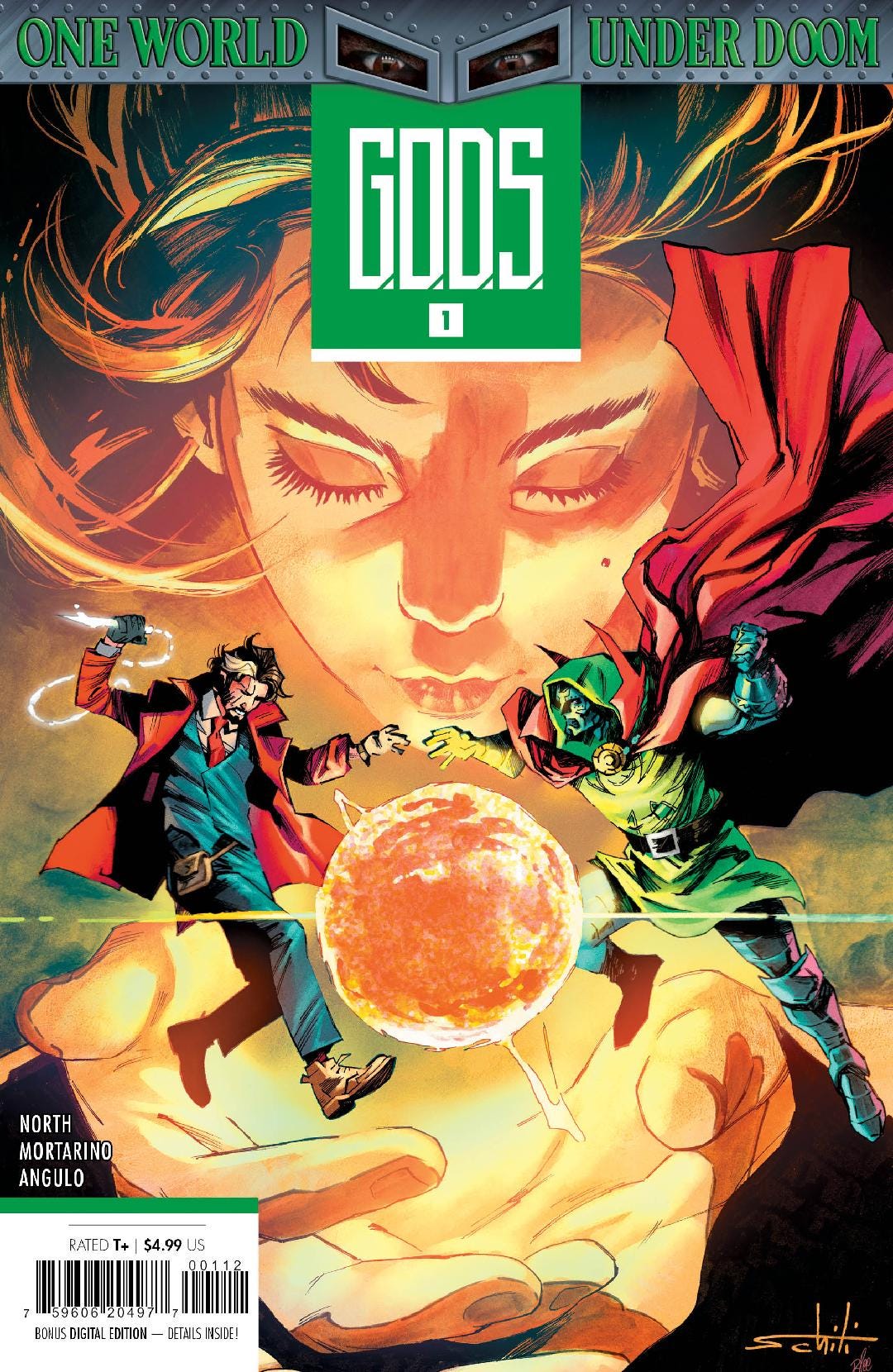
G.O.D.S.: ONE WORLD UNDER DOOM #1 brings back the characters and mythology from last year’s Jonathan Hickman-written series and plops them down right in the midst of Doctor Doom’s ongoing reign over the planet. So this is the same thing only different, as it’s helmed by writer Ryan North and artist Francesco Mortarino, who have a very different flavor than Hickman and previous artist Valerio Schiti (who contributes the cover.)
Posted at TomBrevoort.com
Yesterday, I didn’t post a damn thing. I’m away, you know.
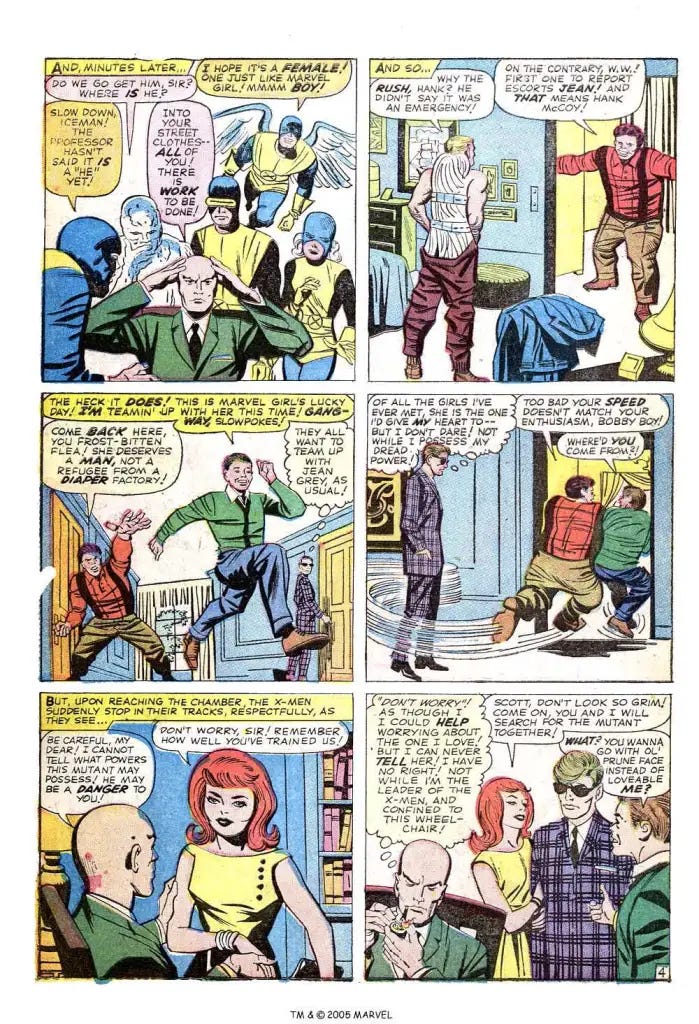
Five years ago, I wrote about Five Best Forgotten Early Marvel Story Developments
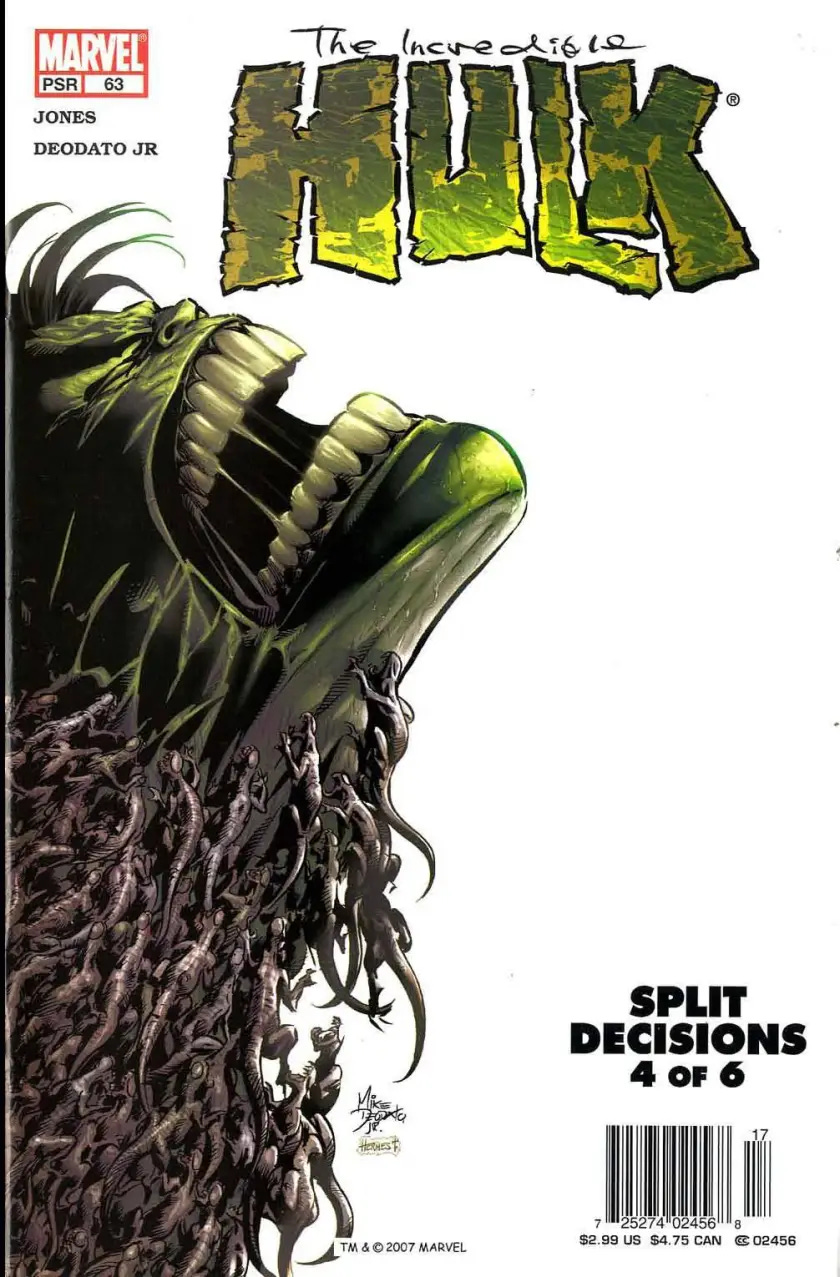
And ten years ago, I spotlighted this Great Cover
And that’s going to do it for this bare-bones installment. With any luck, I’ll be back by next Sunday and in shape to pound the keyboard further, so you’ll get a full-on new installment of this series again. And if not, it was nice knowing you all. Tune back in a week to see which way things go!
Hat’s All, Folks!
Tom B
Please share the full timeline sometime, I’d love to read the rest even if it’s a WIP.
Thanks for the post, Tom. And congrats on the FF box office. I realize your involvement with the movie was approximately none but as the longtime editor, you’re the face of the book.
As for the Superman timeline, I probably missed it but no mention of the pulp story version?